Profound Peace
January 2026
What comes to mind when you consider peace? We long for ‘a bit of peace and quiet’, we witness ‘peaceful protests’, we pray for peace which is synonymous with praying for the cessation of conflict, violence and injustice. Perhaps we most often associate peace with stillness, calm and inactivity, but for Embrace partner Musalaha, peace demands action.
Musalaha is an Arabic word meaning reconciliation from the root word ‘Suhl’, meaning peace. When Musalaha, based in Jerusalem, was founded in 1990, their choice of name was very intentional - they are dedicated to promoting reconciliation between communities separated by ethnic, religious, and social barriers. For the team and for the Israelis and Palestinians who come together to engage with their programmes, finding common ground, understanding and appreciation and ways that they can positively impact one another, peace is something profound - far outweighing anything our world can ever hope to muster.
Saleem Anfous, project manager, shares with us his reflections on peace beyond the world:
“Peace I leave with you; my peace I give you. I do not give to you as the world gives. Do not let your hearts be troubled and do not be afraid.”
Peace cannot be declared in a conference room
In light of recent events and ongoing challenges, I find myself reflecting deeply on the true essence of peace. As the world looked toward Sharm El-Sheikh, where political leaders announced a peace agreement to end the genocide in Gaza, many celebrated what seemed like a turning point. Yet, for those living on the ground, especially across Palestine, this so-called ‘peace’ feels painfully disconnected from daily reality.
Scripture reminds us of a different kind of peace. In John 14:27, Jesus speaks of a peace that transcends worldly understanding: a peace rooted not in diplomatic signatures but in reconciliation, empathy, and genuine harmony among people.
This divine peace reaches into the heart and calls us to a deeper transformation. It is a peace that cannot be declared in a conference room; it must be lived.
The olive branch overshadowed
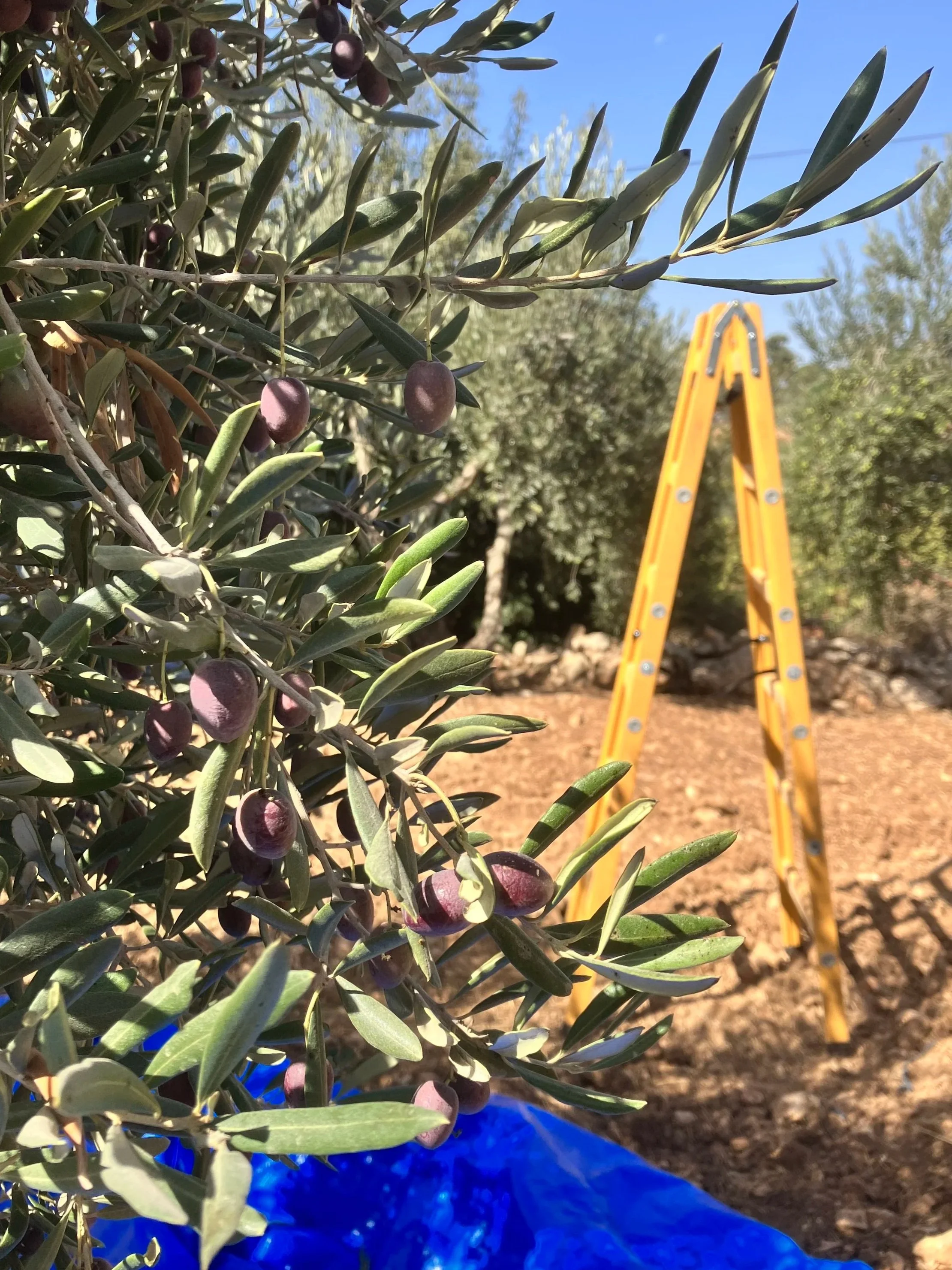
Traditionally the Olive Harvest is a whole community, multi-generational activity
The reality in Palestine, however, tells another story. In my hometown of Aboud, a small Christian village northwest of Ramallah, where my family has lived for seven generations, the recent olive harvest was overshadowed by growing settler attacks and the existential threat from expanding settler outposts. Aboud is an ancient village with deep biblical roots, believed by many to be connected to the site once known as Timnah Serah in Joshua 19. Though small in population, the village historically holds vast stretches of agricultural land that families have tended for centuries.
Yet, despite the promises of political calm after Sharm El-Sheikh, the land around Aboud is becoming increasingly inaccessible. Two established settlements, Beit Aryeh and another nearby, already encircle the area.
In the past two months, two new illegal outposts have appeared on the surrounding hills. These outposts often begin as caravans planted high on the mountaintops, marked by bright lights, Israeli flags, and patrol vehicles. From there, they expand, sometimes adding makeshift barns or fencing, and with each expansion, more Palestinian land becomes effectively annexed.
The danger is not only the loss of land but the threat of violence. When an outpost is built on a hill, entire hillsides become hazardous for farmers to enter. This pattern is well known; we have seen it in Taybeh and other villages where intimidation escalates into attacks on homes, cars, or fields. One of these new outposts now stands alarmingly close to my uncle’s house. Families who have lived peacefully for generations suddenly face uncertainty, fear, and the constant possibility of violence.
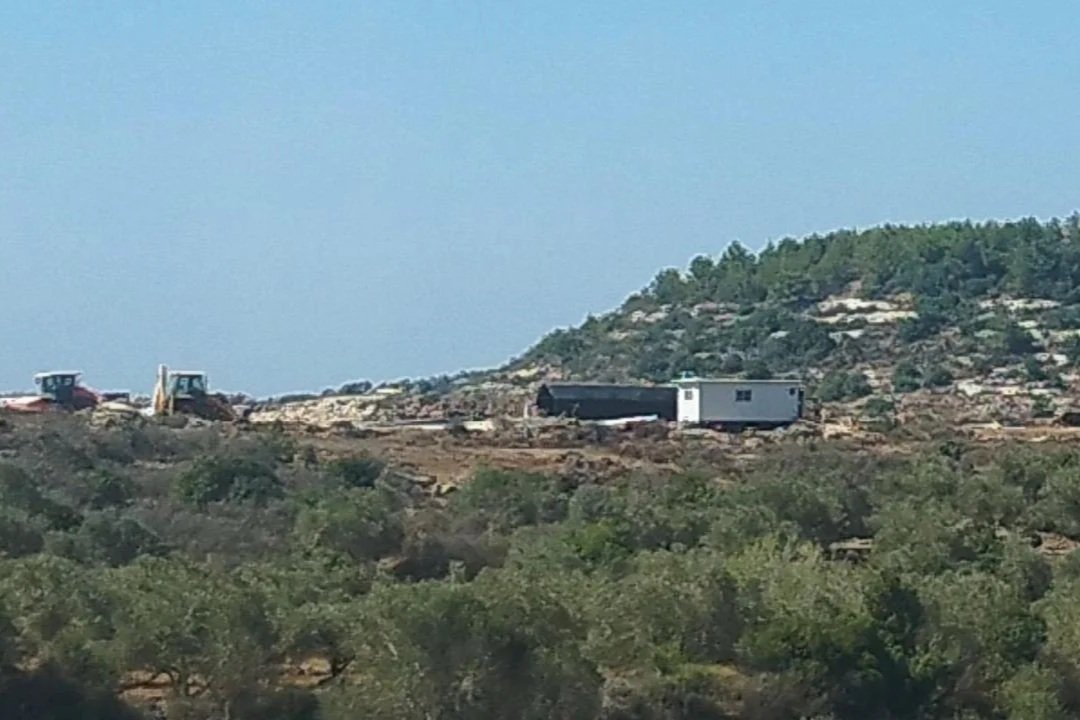
An outpost on the outskirts of Aboud
And all of this unfolded after the ceasefire.
Political leaders may insist that the agreement represents peace, but the lived experience in Aboud reveals something very different. Even ‘peaceful’ political frameworks, such as Trump’s claim that Israel would be prevented from annexing the West Bank, ring hollow when illegal outposts continue to multiply immediately after ceasefire declarations. Annexation does not require an official announcement when land is already being seized in practice.
Ceasefires do not automatically create peace
This brings us to a crucial question: What is true peace? Is peace simply the language of treaties, agreements, and international gatherings? Or is it something deeper—a lived reality marked by justice, safety, dignity, and reconciliation? The peace of God calls us to look beneath political rhetoric. It invites us to confront the human realities of suffering and dispossession. It calls us to resist confusion or complacency when the world declares ‘peace’ yet turns away from injustice.
People in the West, particularly Christians, should be cautious not to accept political narratives at face value. Media coverage may fade, world leaders may claim resolution, and many may assume the situation has improved. But ceasefires do not automatically create peace. Silence does not imply healing and agreements on paper do not transform the lived experience of families still facing land theft, intimidation, and violence.
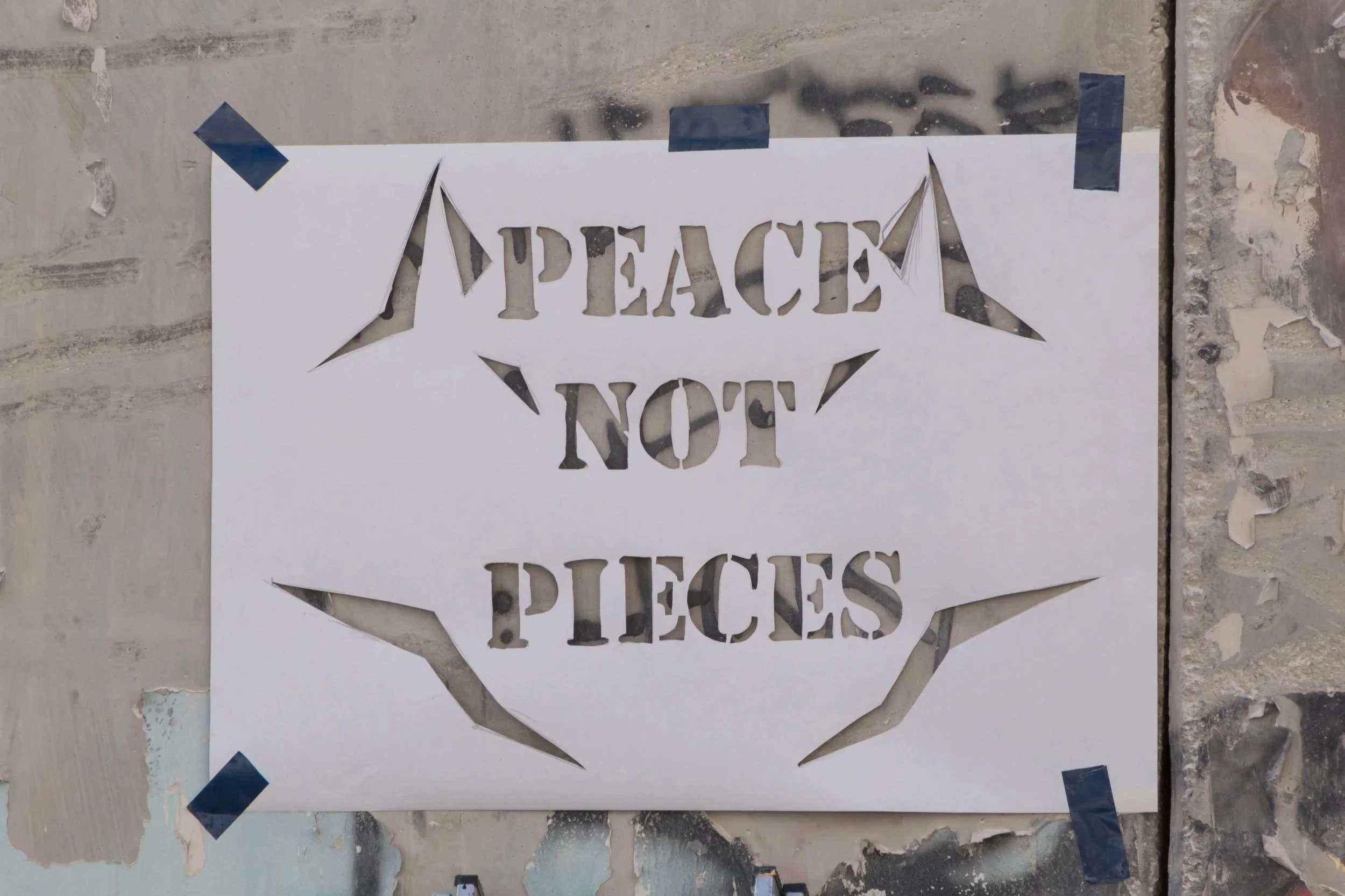
Grafitti on the Separation Barrier, West Bank
Peace requires perseverance
As Christians, we are called to keep seeking peace and justice, not only when conflict is visible on the news, but in the quiet moments after the world has moved on. The work of advocacy, solidarity, and truth-telling must continue. True peace requires perseverance. It requires faithfulness. And it requires that we listen to the voices of those whose lives bear witness to what is happening on the ground.
For me, Aboud is that witness. My village, its ancient history, its Christian heritage, its generations of resilience, embodies the truth that peace cannot simply be declared. It must be lived, protected, and pursued. May we be people who do not settle for political peace alone, but who seek the deeper peace of God, one rooted in justice, compassion, and genuine reconciliation.

The work of advocacy, solidarity and truth-telling must continue
Be part of the Stop Trade with Settlements campaign
Give a regular gift
All donations make a life-transforming difference to communities in the Middle East but planned giving helps us structure our support most effectively
YOU MIGHT ALSO BE INTERESTED IN…
READ MORE FROM MUSALAHA REFLECTIONS ON RECONCILIATION
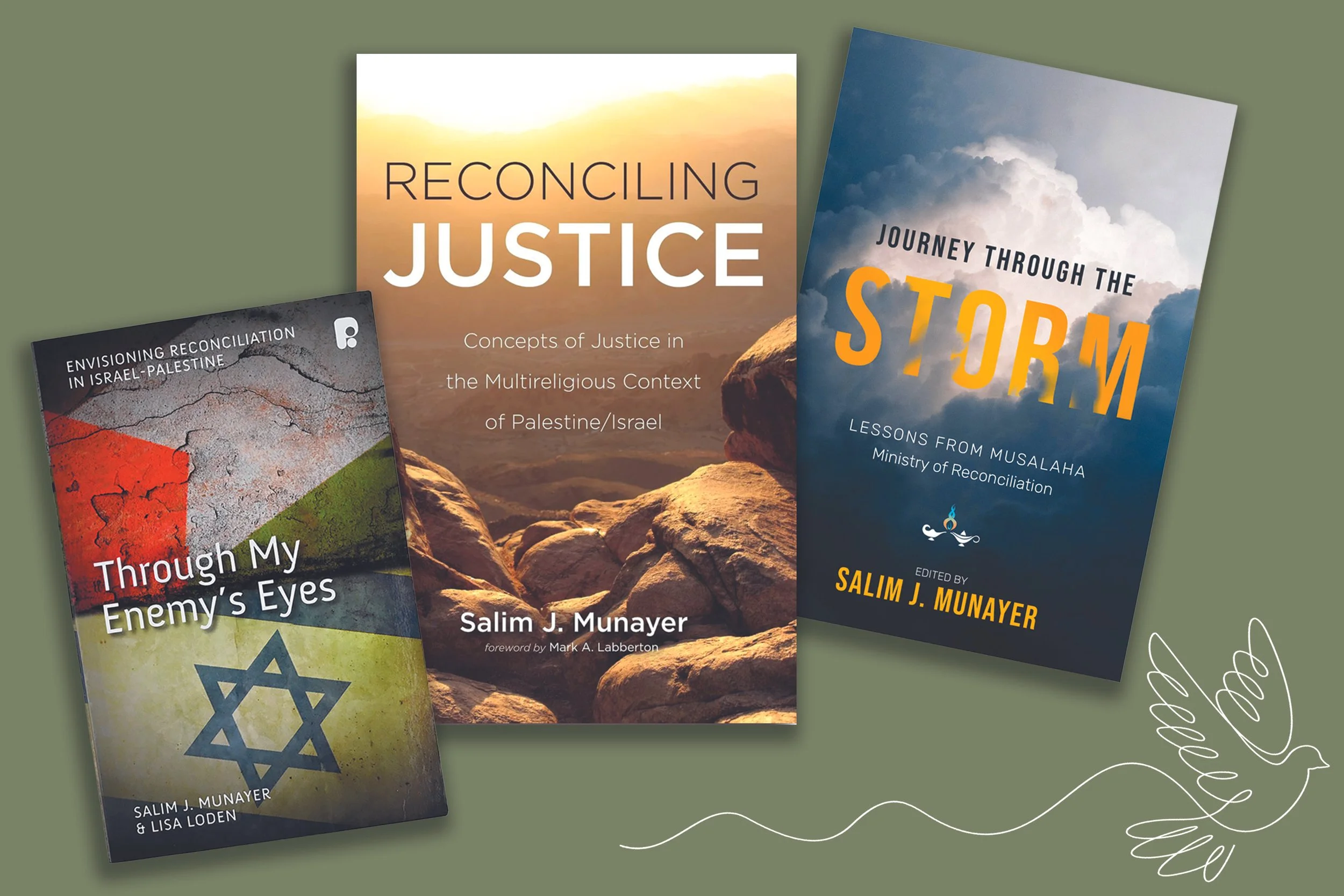
Three inspirational books written by Salim Munayer - founder of Musalaha - available now from our webshop
PRAYERS
FOR PEACE
‘God's peace, which is far beyond human understanding, will keep your hearts and minds safe in union with Christ Jesus.’
Philippians 4:7 (GNT)