Festivities until February - Celebrating Christmas in the Armenian Church
January 2026
Did you know that the Lebanese population includes a significant Armenian minority? Many are descended from families who fled the Armenian Genocide of 1918-20. They brought with them their religious traditions. Now, one of the two catholicosates (similar to archdioceses) of Armenian Apostolic Church is centered in Lebanon.
The Armenian Apostolic Church is one of the oldest branches of church; like many in the Orthodox family of churches, they celebrate Christmas on the 6 January, but they also have many traditions that are distinct.
Armenian Christmas: Celebrating the Birth and Revelation of Christ on 6 January
Across much of the world, Christmas is marked on 25 December. But for the Armenian Apostolic Church, one of the oldest Christian traditions in existence, Christmas is celebrated on 6 January, a date rooted in the earliest centuries of the Church and rich with theological meaning.
For Armenian Christians in Armenia, Lebanon and across the Middle East, this is not simply a different date on the calendar. It is a profound expression of faith, continuity and identity — one that has been preserved through centuries of upheaval, displacement and resilience.
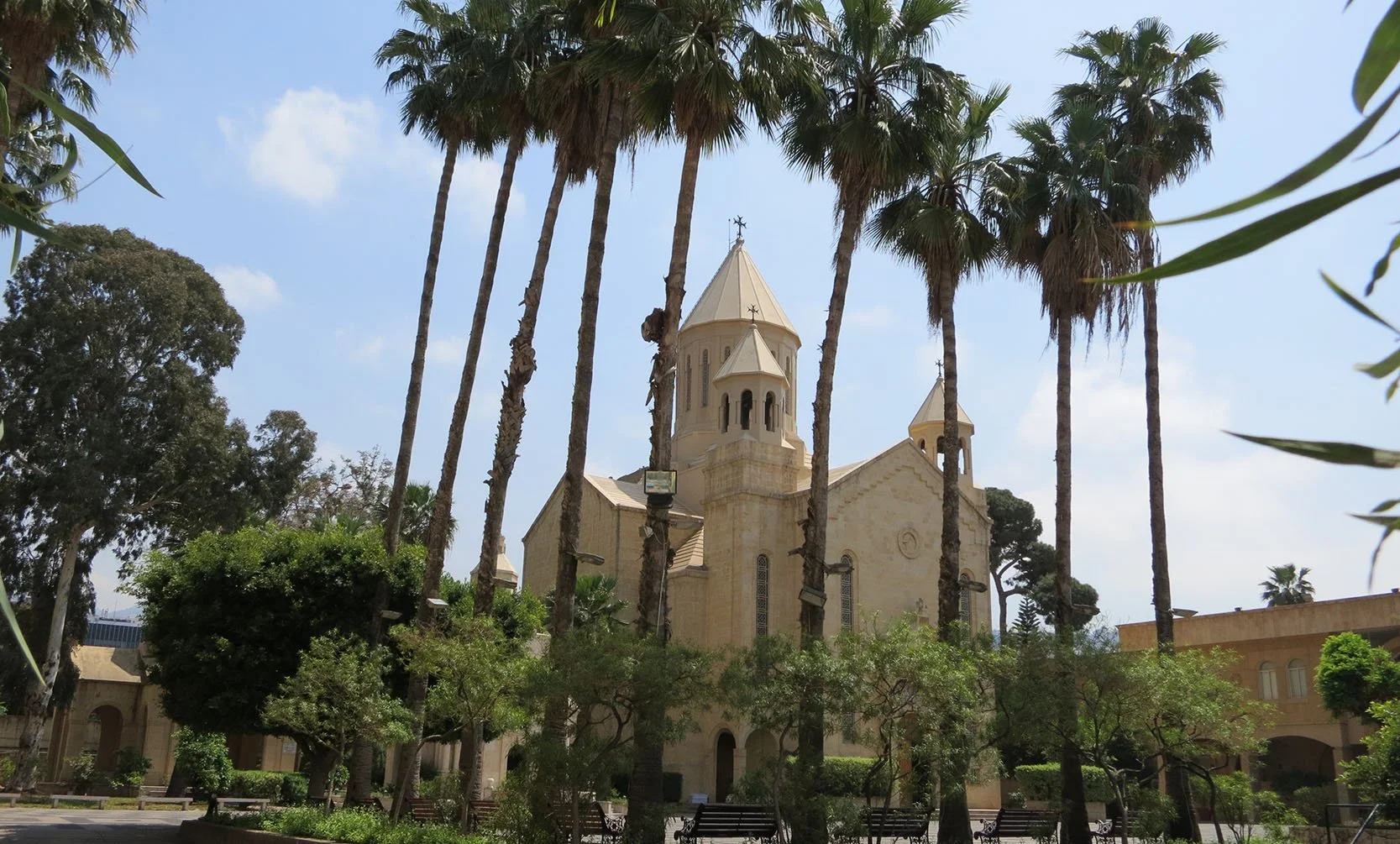
St Gregory the Illuminator Cathedral, Antelias, Lebanon. Antelias is the headquarters of the Holy See of Cilicia, one of the two catholicosates of Armenian Apostolic Church.
One Feast, One Mystery
Unlike most Western and Eastern Churches, which separate Christmas (the Nativity) and Epiphany into two distinct feasts, the Armenian Church celebrates them together on 6 January. This single feast commemorates:
the birth of Jesus Christ,
the revelation of His divinity, and
His baptism in the River Jordan.
This unified celebration reflects the earliest Christian practice, before 25 December became widely adopted in the Roman world. For Armenians, keeping Christmas on 6 January is not about being different — it is about remaining faithful to an ancient rhythm of worship handed down through generations.
The celebration begins on the evening of 5 January with a candlelit service, followed by Divine Liturgy on Christmas Day itself. A central and deeply symbolic part of the feast is the Blessing of the Water, recalling Christ’s baptism and the renewal of all creation through Him.
Christmas as a Season, Not a Single Day
In Armenian tradition, Christmas is not confined to one day. It unfolds as a season of prayer, hospitality and shared life, stretching through early and mid-January. Homes may remain decorated well after 6 January, and families continue to gather, reflecting the belief that the mystery of the Incarnation cannot be rushed or contained.
Armenian dishes are cooked and it is customary to give each other a traditional plate composing of walnut, almond, dried fig, fried apricot and dried plums.
This slower, more contemplative approach to Christmas stands in contrast to the hurried pace that often surrounds the season elsewhere. It invites space for reflection, gratitude and renewed commitment to faith.
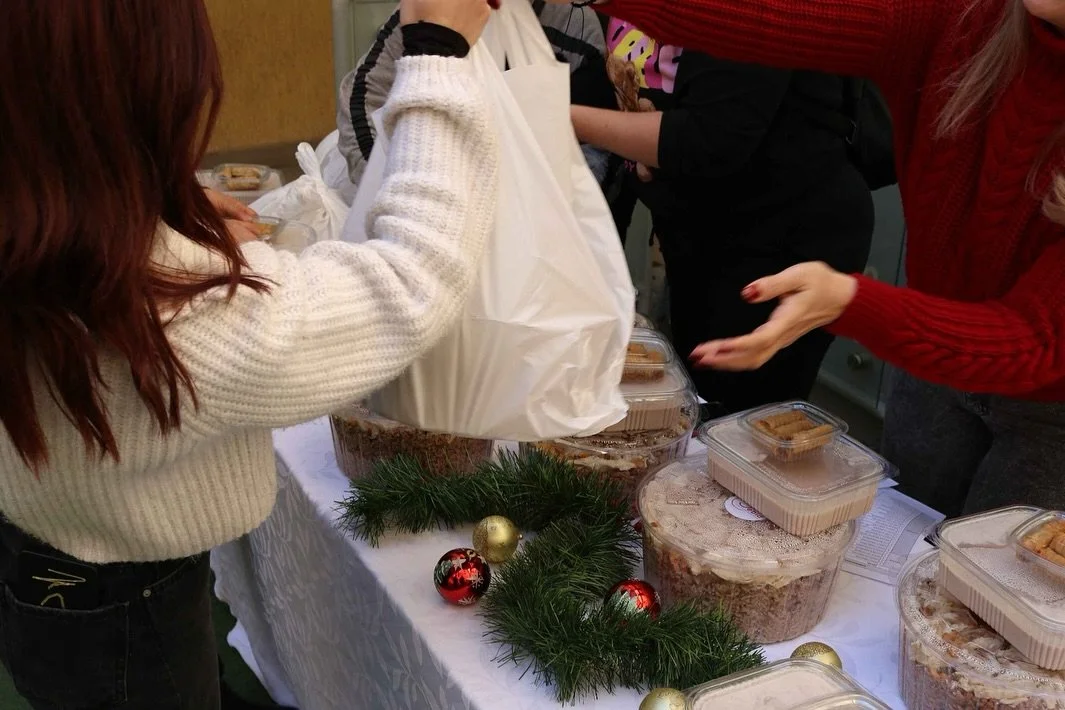
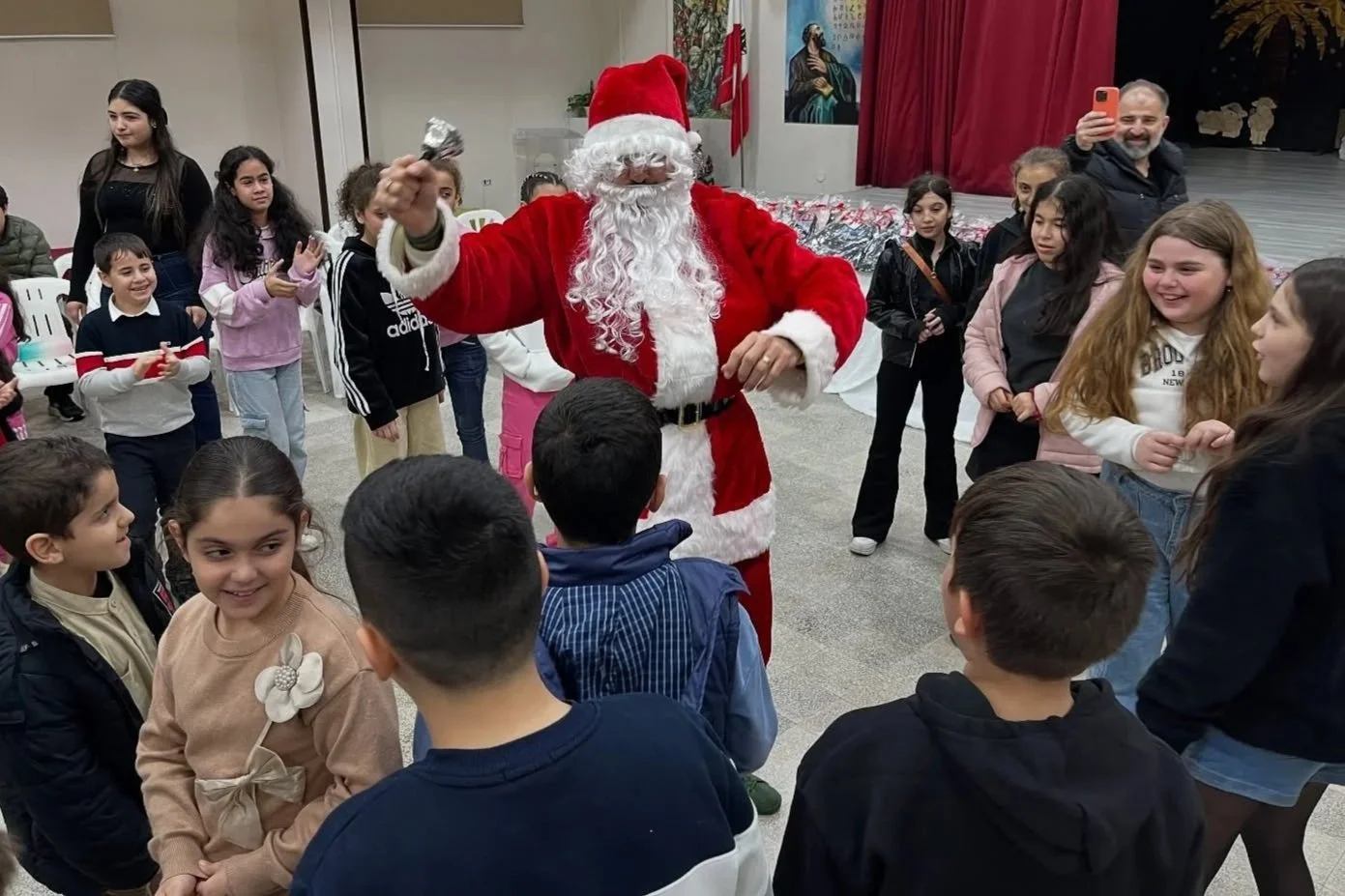
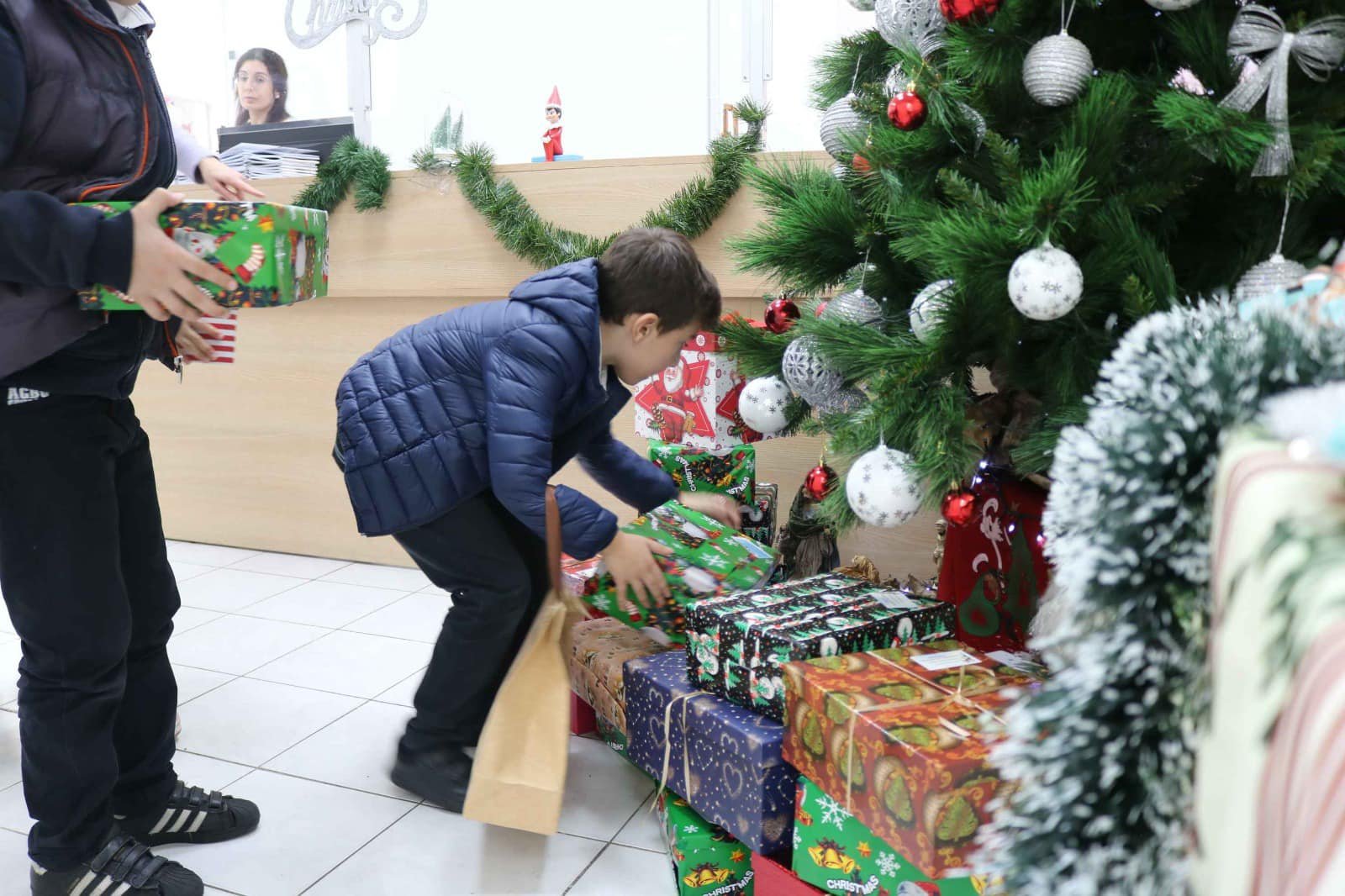
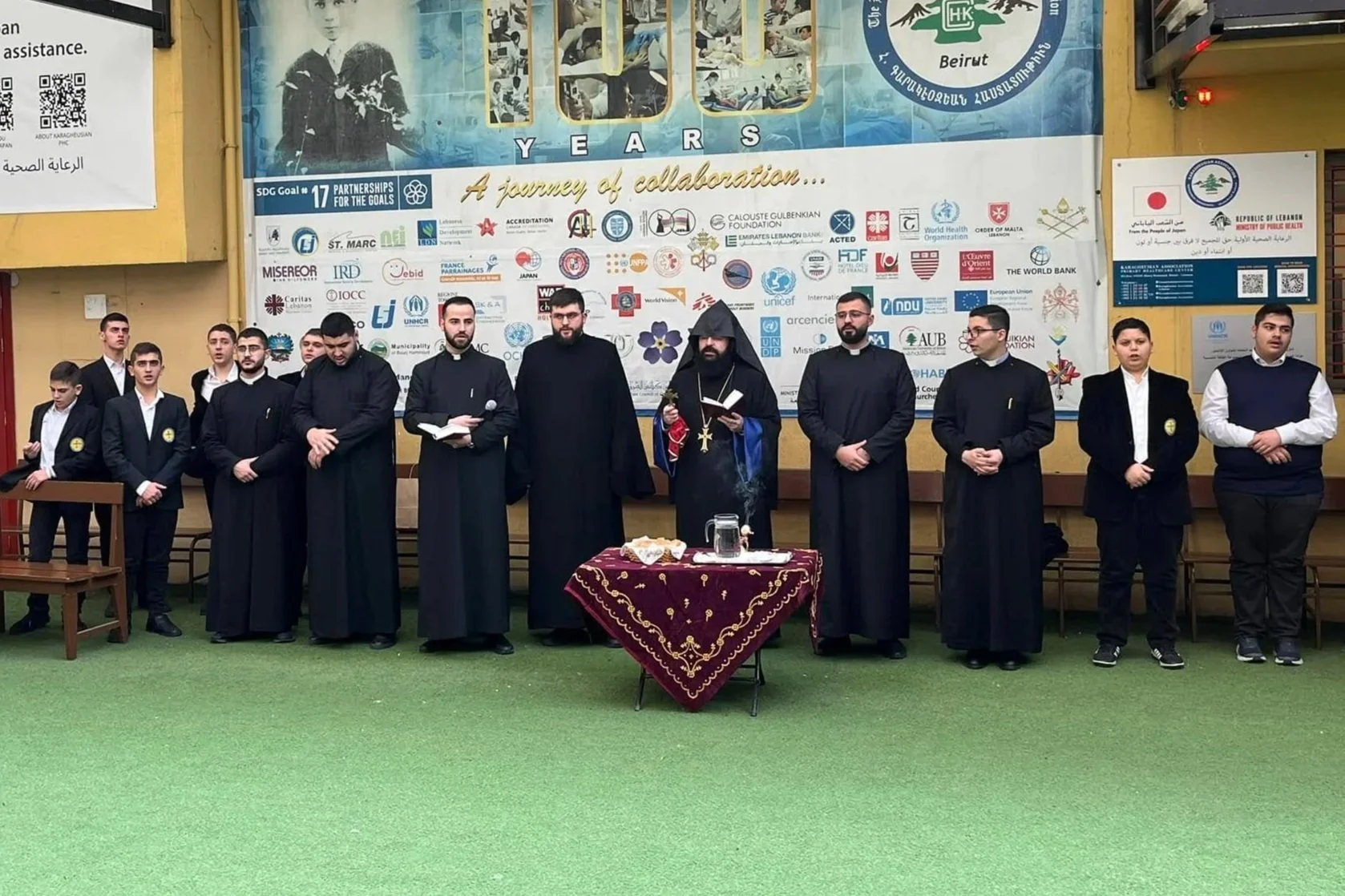
Embrace partner the Karagheusian Association’s healthcare centre is in the Bourj Hammoud area of Beirut, where many Armenian families live. Their centre not only provides high-quality medical care but also a range of social support. Many of the staff at the centre are members of the Armenian Apostolic Church. In the Armenian Christmas spirit, they’ve been holding celebrations at their centre, including giving out Christmas dinners to 100 families, providing entertainment for the children and receiving Christmas blessings from local church leaders:
Celebrating Old New Year
You may sometimes hear 14 January mentioned in connection with Armenian Christmas traditions. This date is not Christmas itself, but rather the Old New Year, observed by communities that follow the Julian calendar, which runs 13 days behind the Gregorian calendar used internationally today.
For many Armenian families, 14 January becomes a gentle continuation of the festive season, an opportunity for additional family gatherings and goodwill after the spiritual intensity of Christmas on 6 January. It carries echoes of celebration, but the heart of Armenian Christmas remains firmly centred on the Nativity and Epiphany feast earlier in the month.
The Feast of Diarentharach
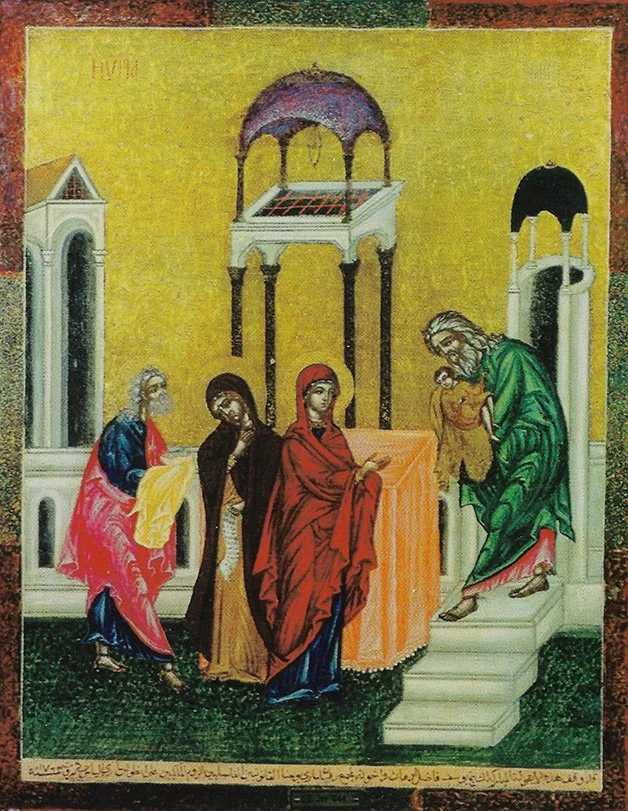
Presentation of Christ at the Temple. Eighteenth-century icon in the collection of the Melkite Greek Catholic Archeparchy of Beirut and Byblos.
In many Armenian households Christmas decorations stay up until the Diarentharach feast, also known as Dyarnuntarach (Armenian for "bringing forward of the Lord") on 14 February. This is an Armenian Christian feast day that commemorates the Presentation of Christ at the Temple and is celebrated forty days after the Armenian Christmas.
The feast combines the biblical account of Mary and Joseph presenting the baby Jesus at the Temple with ancient, pre-Christian customs associated with fire, youth, and the coming of spring.
The Christian observance is based on the Gospel of Luke (Luke 2:22-40), which describes the meeting with the devout Simeon and the prophetess Anna in the Temple.
On 14 February Christmas trees are taken down and brought to the church courtyard and burnt. This is seen as a commemoration of the burnt offering that would have been part of the ceremony of baby Jesus’ Presentation at the Temple.
Keeping Faith Alive in the Middle East
For Armenian Christians across the Middle East, in countries such as Lebanon, Syria, Israel and Palestine, celebrating Christmas on 6 January is both an act of worship and an affirmation of identity. In contexts marked by political instability, economic hardship and emigration, these ancient feasts help anchor communities in hope and belonging.
At Embrace the Middle East, we are privileged to support Christian communities who continue to live out their faith with courage and grace. The Armenian celebration of Christmas reminds us that Christianity in the Middle East is not a recent or fragile presence, but a deeply rooted, living tradition one that continues to bear witness to hope, even in the most challenging of circumstances.
As Armenian Christians gather this January to celebrate the birth and revelation of Christ, we stand with them in prayer giving thanks for their faithfulness, and recommitting ourselves to walking alongside our sisters and brothers across the region.
YOU MIGHT ALSO BE INTERESTED IN…
UPCOMING EVENT - ‘
Light in the omni-crisis: One man’s story of faith, resilience and hope’
1 March, Bloomsbury Central Baptist Church and via livestream
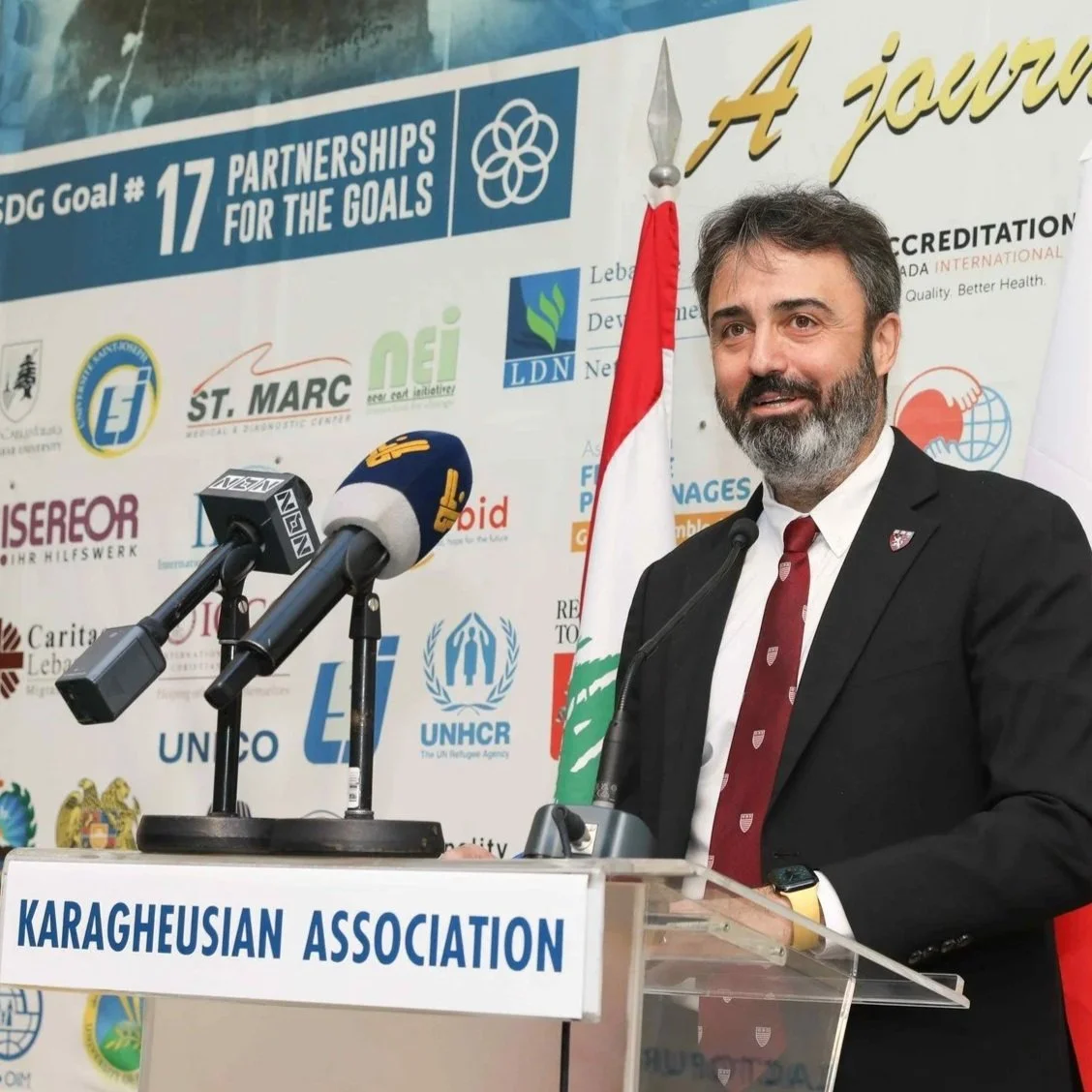
In a country gripped by multiple crises, where conflict, economic collapse, and displacement converge, Embrace’s partner, The Karagheusian Centre in Beirut stands as a beacon of practical hope. Driven by deeply held Christian faith, the Centre offers healthcare and dignity to a community on the margins. Join the Karagheusian’s director Serop Ohanian as he shares how steadfast resilience and compassion can transform lives and inspire us all to act with courage in a fractured world.

HOW EPIPHANY IS CELEBRATED IN THE ASSYRIAN CHURCH
Our friend Fr Emanuel, Archimandrite of the Assyrian Church of the East in Iraq, and Director of our partner in Northern Iraq CAPNI, tells us what Epiphany is like in his church

LENT IN THE MIDDLE EAST
Many of our friends and partners in the region belong to the Orthodox family of churches. Here, in their own words, some of our partners reflect on how Eastern Christians mark this holy season in parts of the region.