Simply Speaking the Truth is an Act of Resistance
by Revd Iain Osborne - Trustee of Embrace the Middle East
Over the last few years, Embrace has been actively turning up the volume on our advocacy. There is real public desire for speech about justice which is not angry and hate-filled, but rooted in a spirituality of shalom and reconciliation.
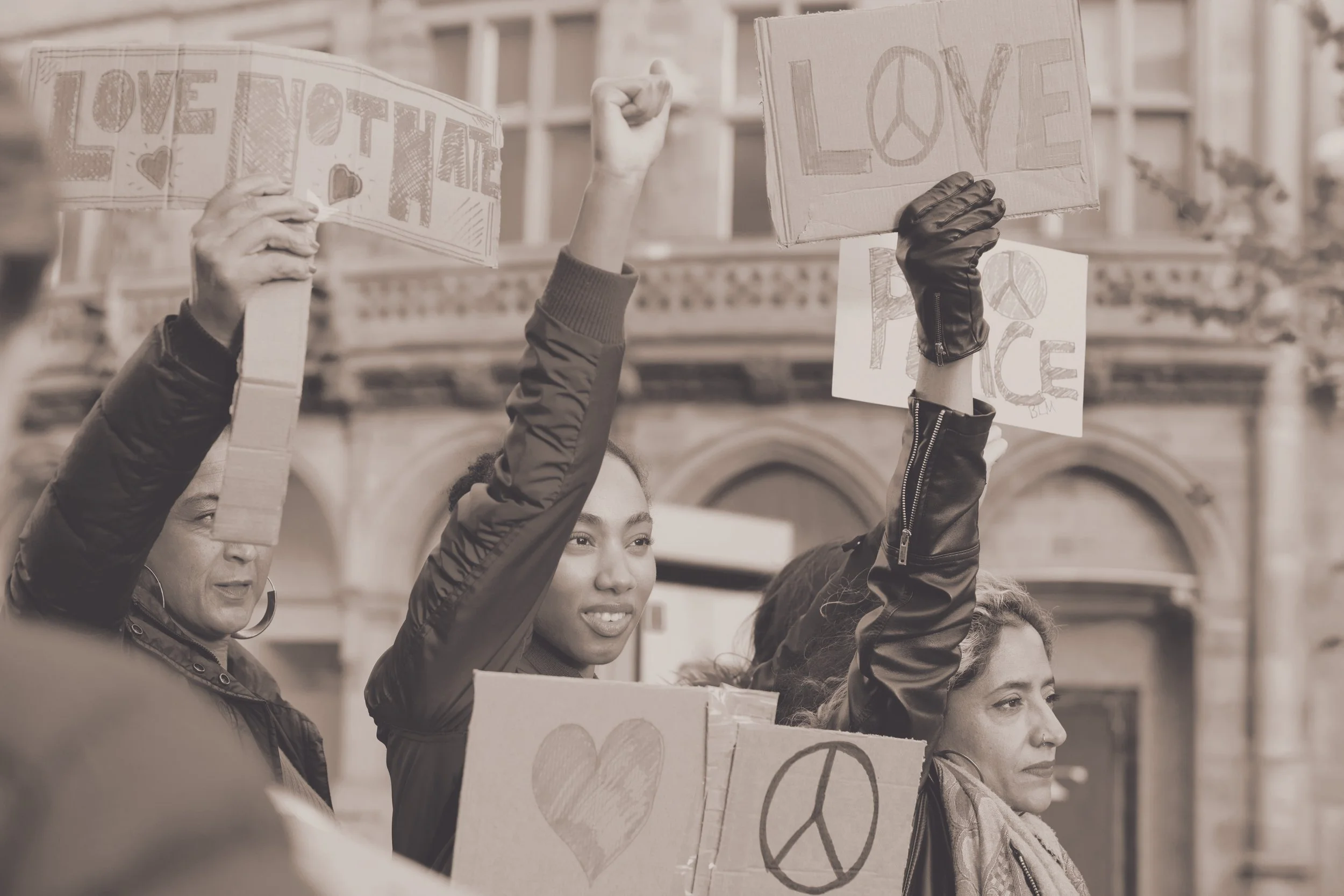
Scripture is replete with bold, peace-filled advocacy
It’s not hard to find examples in the Bible of bold but peace-filled advocacy. Take Acts 4:13-20, Peter and John had gone to the Temple to pray. When a lame beggar asked them for money, they instead gave him the gift of healing. For this, they were arrested, and called before the Council to account for themselves:
‘Now when they saw the boldness of Peter and John and realised that they were uneducated and ordinary men, they were amazed and recognised them as companions of Jesus. When they saw the man who had been cured standing beside them, they had nothing to say in opposition. So they ordered them to leave the council while they discussed the matter with one another. They said, ‘“What will we do with them? For it is obvious to all who live in Jerusalem that a notable sign has been done through them; we cannot deny it. But to keep it from spreading further among the people, let us warn them to speak no more to anyone in this name.” So they called them and ordered them not to speak or teach at all in the name of Jesus. But Peter and John answered them, “Whether it is right in God’s sight to listen to you rather than to God, you must judge; for we cannot keep from speaking about what we have seen and heard”.’
Acts 4:13-20
Last autumn, I discussed with some brand-new Church of England curates how we should respond when encountering people experiencing homelessness. Does the dog-collar change how you respond when you encounter someone asking for money or help? Does being ordained make you kinder? We decided no - as Galatians 5 tells us, kindness is a fruit of the Holy Spirit, and the Holy Spirit is upon all baptised people, not just ordained ones! But becoming a representative minister (on an Anglican understanding) does bring a newly sharpened sense of obligation to call out evil – to say homelessness is not OK.
My curates worried that, if they couldn’t fix the situation, anything else was second-best. This is not true. But, in our utilitarian culture, simply speaking the truth is under-valued.
Of course, we help where we can. Embrace exists to help Christians help people. Helping and witnessing go together and support each other. In Acts 4, Peter and John won an opportunity to speak the gospel word because they had concretely helped a person. Similarly, Embrace has an opportunity to speak out about life in the Middle East because we help through our partners’ work – our witness has credibility because we have relationships with those in the region and have seen first-hand what is happening.
But we must not let our witness collapse into simply being a by-product or sub-category of helping.
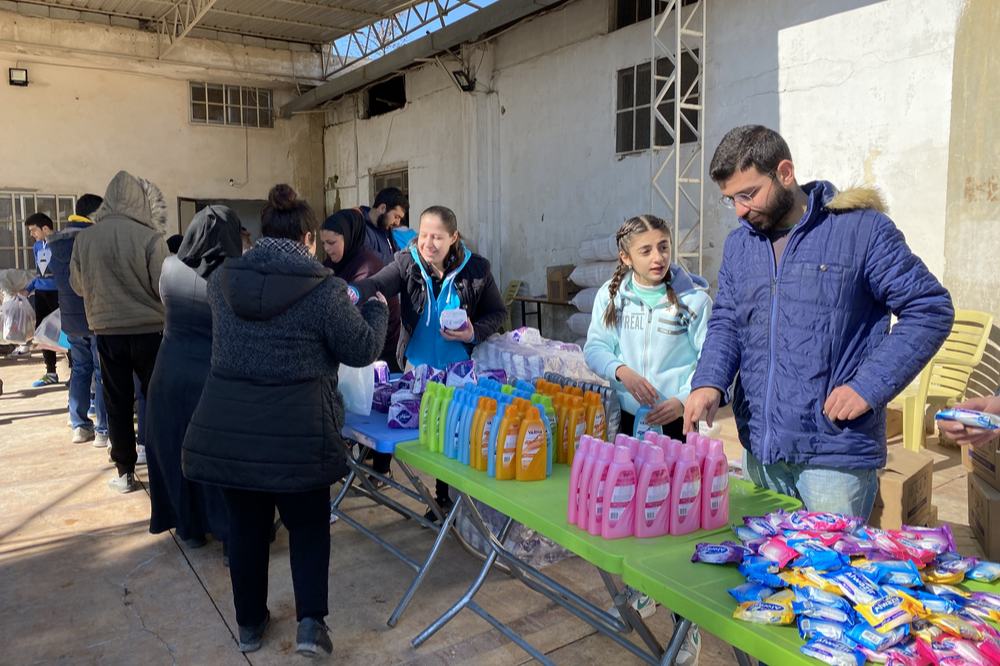
Displaced families in Syria recieve hygiene kits from Embrace partner Pontifical Mission
Christians should bear witness to Kingdom values, whatever impact our words may have
As the Apostles said:
‘Whether it is right in God's sight to listen to you rather than to God, you must judge; for we cannot keep from speaking about what we have seen and heard.’
Our listeners are accountable for how they receive our speech, and that is something we cannot control. Our accountability is to speak God’s truth, as we have received it.
Whether truth is useful, or achieves an outcome, are ill-formed questions; they betray a category error. Truth matters for its own sake, because the work of truth in the world is an aspect of the work of God in the world, and God is inherently good. This is worth restating at a time when powerful currents in our culture do not value truth. They claim to value ‘free speech’ yet use it as a means of achieving power over others, not because they value truth.
Basic moral theology teaches that if you can’t tell true from false, then you also can’t tell right from wrong – and we see that powerfully illustrated in the world today.
Speaking truth matters most when we can’t see a way to change things
When democracy doesn’t seem to work, when the only people who seem to have influence appear not to care what we think; those are not times to pipe down, because ‘there’s no point, they’re not listening.’
To speak at that time is:
A way of safeguarding one’s own humanity and integrity, by saying ‘not in my name.’
An act of resistance. To affirm our affiliation to truth, to goodness, to God - is to affirm that the battle is not finished. Evil has not won; darkness has not fallen. To speak in public, to choose to be salient, is to raise a flag around which other people of goodwill can gather.
An investment in the future. The wheel will turn – it always does – opportunities for change will re-emerge. When they do, the possibilities that come to hand in that future time will depend a great deal on whether people have kept alive a truthful narrative, during the time when change was not possible.
None of which means that speaking the truth is easy
Bearing witness has its own cost, quite independent of the cost of acting to achieve change, and that cost can be very heavy.
In these past two years, as the world has witnessed the atrocities occurring in Gaza, the Israeli-Palestinian conflict has been at the centre of media coverage. It has perhaps felt easier, or at least more common-place, to speak out for Palestinian people. But that did not used to be the case, and it might not be the case in the future.
The greater challenge at present is to speak without hate. To maintain a measured tone, which does not only highlight evil acts but also witnesses to the greater power of love to overcome evil. Choosing to maintain that witness means refusing to speak in a tone that demonises or denigrates the humanity of all involved, including those who, for now, are working against peace.
To bear witness requires courage, fortitude, and endurance

We need to gauge wisely our reserves of these virtues, to act within and not beyond our own strength. If advocacy is part of our calling, we should consider how we can build up our moral resilience, so we can carry the weight and continue to stand with those facing oppression and speak out against injustice.
As Christians, we are called to bear witness to the Light. The Light shines in the darkness. The darkness does not understand it, but nonetheless the darkness has not, and will not, overcome it.

You can bear witness by speaking out today:
Participate in our Advocacy campaigns and amplify the voices of the marginalised and oppressed.
YOU MIGHT ALSO BE INTERESTED IN…
DIGNITY, RECOGNITION & PROTECTION
Legal aid for undocumented citizens in Lebanon
FEAR, ANXIETY &
DISTRESS
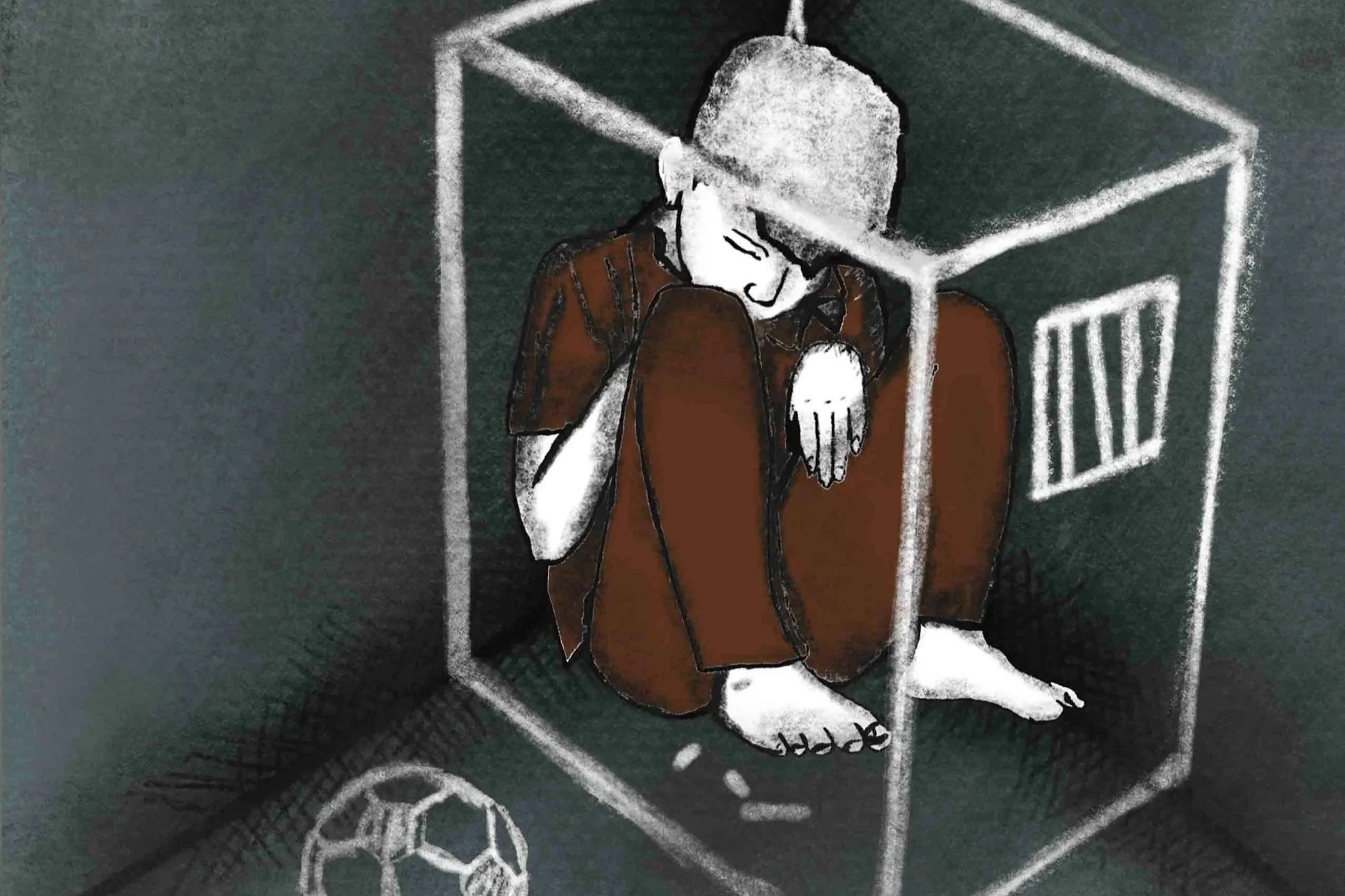
The lasting impact that military detention is having on young people in the West Bank