What does Christian faithfulness look like in the shadow of yet another war?
By Revd Su McClellan
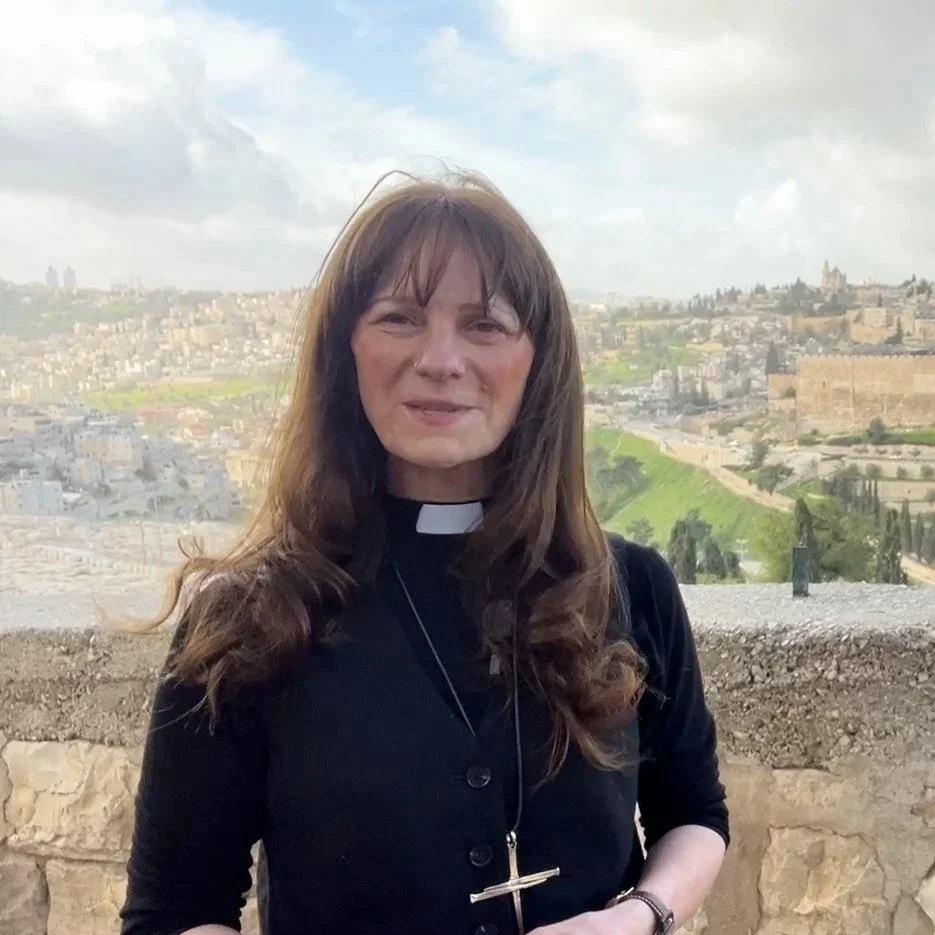
Revd Su McClellan
On Saturday I awoke to the news that the United States and Israel had launched coordinated strikes across Iran and that Iran was retaliating with waves of missiles and drones, striking at Israel and U.S. bases across the Gulf. As I was watching the news and drinking my morning coffee, I received a desperate call from a friend in Haifa as she was running to the shelter. I could hear the sirens in the background and the rocket alerts going off on her phone. She sounded terrified. “It’s too much fear,” she said.
A friend in Jerusalem messaged to say they were sat in the bomb shelter feeling utterly exhausted and depressed.
For our friends in Bethlehem and Ramallah and elsewhere in the West Bank and Gaza, there are no shelters in which they can take refuge.
Due to preach at Coventry Cathedral the next day, what could I say in this moment? In this mixture of fear, anger, grief, and uncertainty, the lectionary for the Second Sunday of Lent (Genesis 12.1–4a, John 3.1–17, Romans 4.1–5, 13–17) meant we found ourselves reading about call, promise, and new birth.
The Bible tells us that God’s promise is to all - not one nation at the expense of another
In Genesis 12, Abram hears God say; “Go from your country, your kindred, and your father’s house to the land that I will show you.” Abram is asked to step into the unknown, unprotected and with no map. All he has is trust.
The text is painfully relevant today. In Israel, in Iran, across Palestine, and throughout the Middle East, families have been awakened by sirens and explosions, thrust into their own unwilled journeys into uncertainty. No one chooses to run for shelter under missile fire. No one chooses to wonder if their home will still be standing by nightfall.
Yet this reading from Genesis highlights the truth that God’s call is not to safety, but to faithfulness. This is a truth that the politics of this fractured region of the world has overlooked. God promises that through Abram’s faithfulness, “all the families of the earth shall be blessed.” All the families. Not one nation at the expense of another. Not one people secure while another suffers.
This is a moment to confess that Christians have too often read God’s promises selectively, attaching divine legitimacy to the ambitions of nations. But the Abrahamic promise is universal, outward‑flowing, and oriented toward peace.
Restorative newness comes not from the actions of the powerful, but from God’s unsettling, boundary‑breaking movement
The Gospel reading tells of Nicodemus coming to Jesus “by night” - not merely signifying a time of day, but indicating fear, confusion, and being in the dark. Many today across the Middle East are living in that same night, a night of dread, a night of political brinkmanship played out over the bodies of civilians.
Jesus speaks to Nicodemus of being born again, born from above: a startling, disorienting re‑beginning. It is as if he says, “You cannot solve this from the ground you’re standing on. You need a different spirit, a different imagination, a different life.”
The conflict in the Middle East seems intractable and how desperately the region needs such new birth today. How deeply our world’s leaders need to imagine a world beyond missile strikes and retaliation. Jesus points out to Nicodemus that the Spirit is like the wind and will blow where she chooses. Restorative newness comes not from the actions of the powerful, as previous attempts at ‘regime change’ have shown us all too often, but from God’s unsettling, boundary‑breaking movement, often through the very people who are dismissed or overlooked.
Christians cannot retreat into private spirituality when missiles are falling
Romans 4 reminds us that Abraham’s righteousness did not come from law, nation, or power, but from trust, trust in the God who brings life out of what seems dead.
This is a deeply political claim. It’s not partisan, not tied to an ideology, but political in the sense that it speaks into the polis, the life of the community, the nations, and the decisions that shape our common future.
I recently had a conversation with someone who commented that they don’t come to church to listen to political sermons. Desmond Tutu was once heard to say that when Christians say that politics and Christianity don’t mix, “I wonder what bible they’re reading”. Christians cannot retreat into private spirituality when missiles are falling because the Gospel is always embodied in public life. It is always concerned for the vulnerable, the displaced, and the threatened.
If Abraham’s and our faith is counted as righteousness, then faith must have public consequences. It must have a commitment to peace-making, to truth-telling, to defending human dignity. The Middle East, as with so many other places of war and conflict, is trapped in a cycle of fear and retaliation because leaders trust more in force than in the promise of life.
As history teaches us, violence begets violence. Iran responded to Saturday’s attacks by launching waves of missiles across the Gulf, targeting Israeli and U.S. facilities, and striking at civilian areas. Since then the conflict has spread, drawing in more countries.
The initial strikes, themselves planned and executed in partnership between the U.S. and Israel, have plunged the whole region into greater danger. This is not faithfulness; this is the logic Romans warns against. The logic that imagines righteousness and security can be achieved through force.
What does Christian faithfulness look like in the shadow of yet another war?
So what does all this mean for us? What then, does Christian faithfulness look like in the shadow of yet another war? I think it means four things that we can each actively play our part in:
1) We tell the truth.
We name violence honestly, whether committed by nations we sympathise with or nations we distrust. We refuse propaganda, manipulation, or the selective dignity of some lives over others.
2) We stand with those who suffer.
Not abstractly, but concretely with churches, hospitals, NGOs, and civilians in Iran, Israel, Gaza, the West Bank, Lebanon, and the Gulf. Saturday’s attacks have placed millions in danger. Our solidarity must be more than sentiment or virtue signalling. It will necessarily be costly. It must shape our advocacy, our actions, our ethical choices and our prayers.
3) We engage politically in a way informed by our Gospel values.
This means seeking policies that protect life rather than escalate death, holding leaders accountable under international law, supporting diplomatic and peace-building efforts, resisting narratives that excuse violence as “necessary,” and insisting that God’s promise is for all peoples.
4) We live as people of steadfast hope.
Hope is not optimism. Hope is what Abraham had, trust in God’s future even when the present is unbearable.
In our current climate, it so often feels that there is so little we can do but this is where the rubber of our faith hits the road of our reality. We can stay silent or we can begin to trust and proclaim from the rooftops that, “God so loved the world…” Not one side. Not one nation. Not one people. The world.
Jesus’ declaration is both comfort and calling. “God did not send the Son into the world to condemn the world, but in order that the world might be saved through him.” And that is where we must choose to stand. Not with the missiles, rhetoric and fear that freezes compassion, nor with the despair that numbs our responsibility but with the one who came to save the world.
Like Abraham and Nicodemus we are called to trust and reset as citizens of the Kingdom of God. A kingdom that is not built from fear or force but out of love. We really do have a Gospel to proclaim with our lives. A Gospel that stubbornly insists that God loves the world enough to send his Son to die for us and this is a message our beautiful, fractured world needs to hear.
EMERGENCY APPEAL
As violence escalates, families across the Middle East are bracing for what comes next. Right now, through trusted local partners, we are reaching into communities quickly, even when access is difficult, to bring practical help where it’s needed most. Please help us respond with your donation today.