Rats, rubbish and lice: The horrific conditions in Gaza’s displacement camps
The media reports on Gaza have diminished, but this doesn’t mean the situation is getting better – far from it. Conditions are catastrophic, and our partners there warn that they are getting worse.
“When there were more missiles we were counting hundreds of dead from the missiles, but now we are counting thousands of dead from lack of healthcare and hygiene.”
Al Ahli hospital, Gaza City, May 2026.
Embrace continues to support partners in Gaza - Al Ahli Hospital, Caritas Jerusalem, the NECC and the Princess Basma Centre disability unit - as they provide medical care, rehabilitation for children, psychosocial support and cash assistance for the most vulnerable, but ongoing restrictions and delays on aid entering Gaza mean they do not have the full resources that they need. We need your help to get Gaza back in the media spotlight and push for immediate unfettered humanitarian access. Here are the headline issues that our partners say need urgent intervention. Please share this update with your church communities, friends, MPs and online:
Inadequate shelter and overcrowding causing a health catastrophe
For most families, tents are no longer a temporary shelter, but a prolonged reality. There is nowhere else to go. Over three-quarters of Gaza’s housing has been damaged or destroyed.
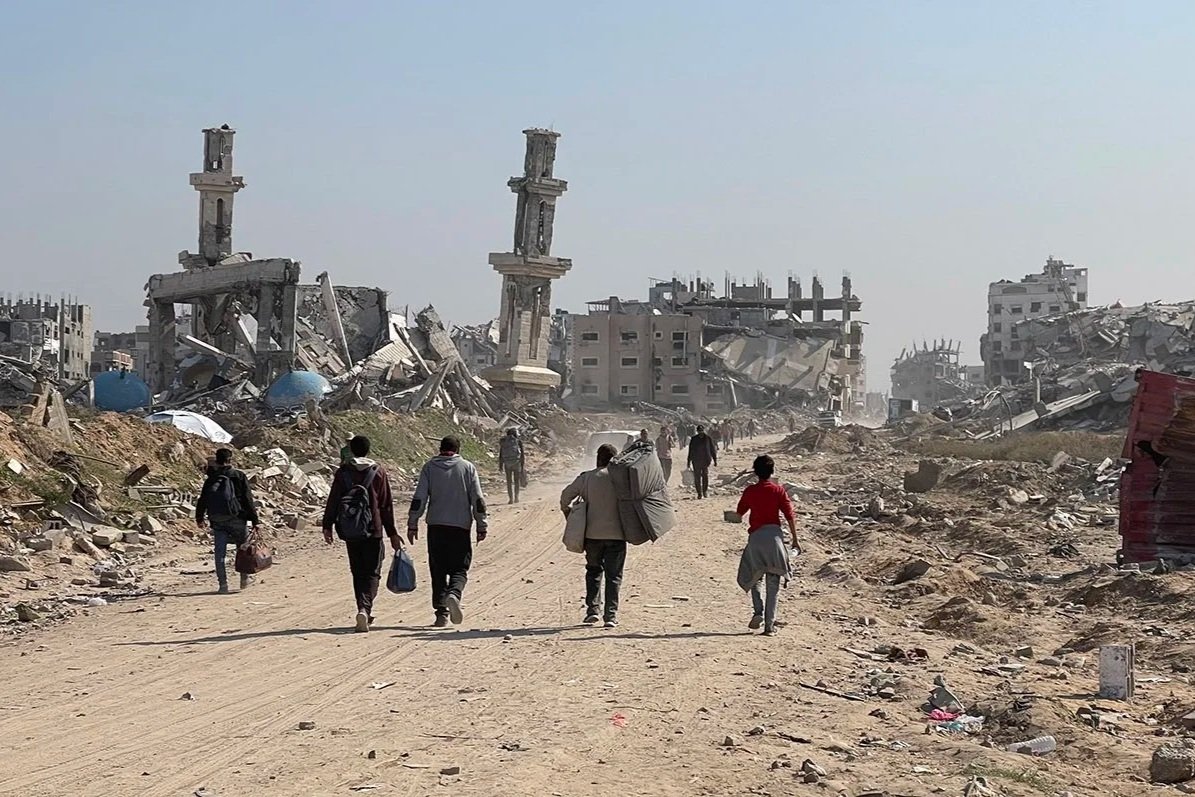
Even before 7 October 2023, Gaza was one of the most densely populated places on earth. Since the ceasefire, civilians have been pushed into ever‑shrinking areas, as large parts of Gaza are now inaccessible or under displacement orders. Today, it is reported that most of the 2 million population is now squeezed into just 68 square miles along the coast.
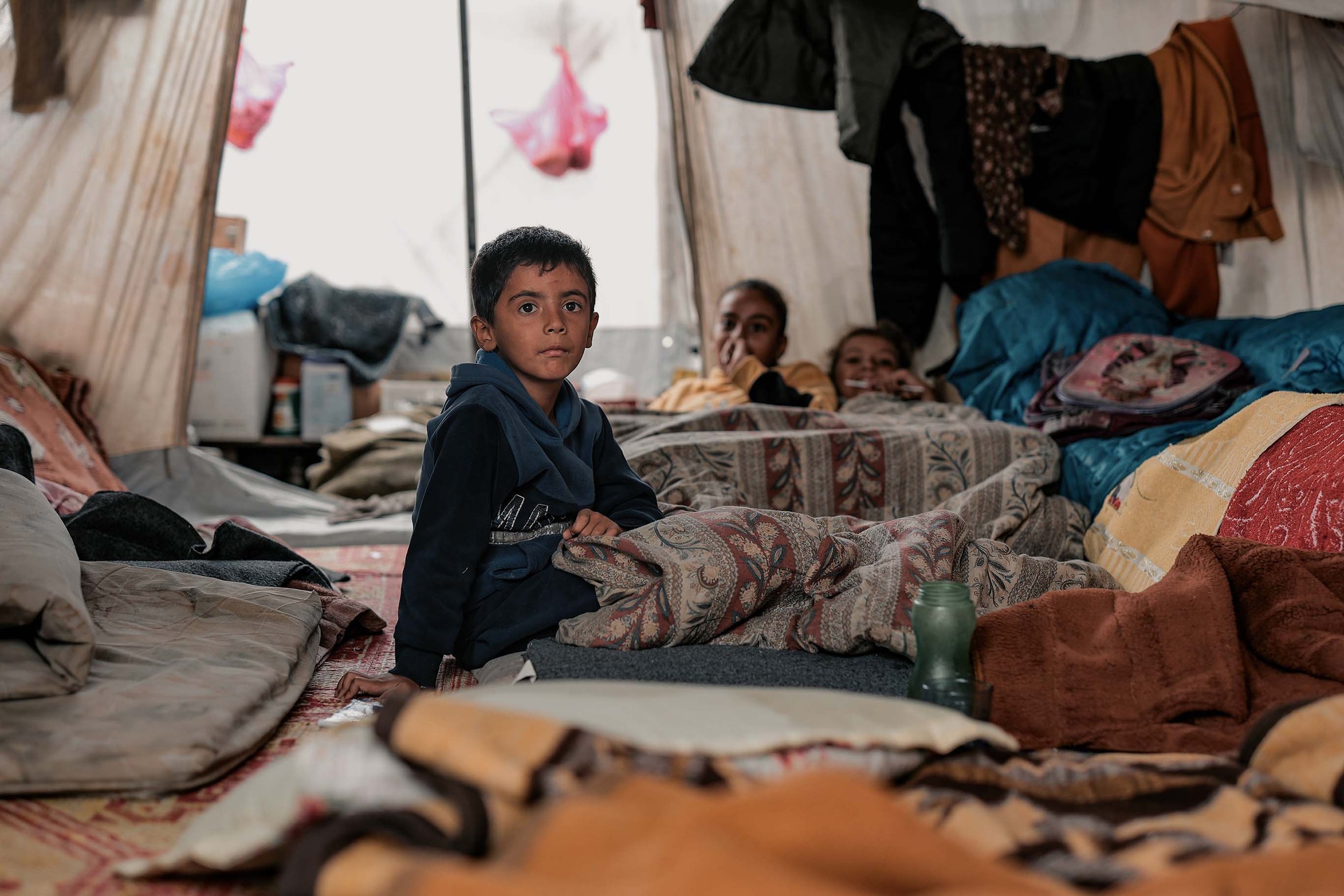
Tents in crowded displacement camps in Gaza are now no longer a temporary condition, but a long-term reality. (Image credit: Hosny Salah)
Displacement camps are overcrowded and exposed. Even the simplest routines become difficult - keeping clean, cooking, managing illness, and even resting becomes a challenge when multiple people share a small shelter.
The medical teams of our Gaza partners consistently warn about the toll this takes on health. Children develop skin conditions that do not heal properly. Minor wounds become more serious, while ailments like scabies and lice spread quickly.
They describe a pattern that is hard to break: people are given treatment, but return to the same environment, where illness quickly returns.
Infectious diseases now the biggest threat, with water and sanitation under strain
Access to safe water remains extremely difficult. Much of the systems that once provided clean water have been damaged or destroyed. MSF reported that nearly 90 per cent of water, sanitation and hygiene (WASH) infrastructure is no longer functioning.[1] What remains does not meet the need and can be unreliable or unsafe. In displacement camps, families dig makeshift toilets in their tents or have to share one with many others, and untreated sewage affects both the environment and living spaces leading to serious and recurrent implications on health.[2]
At the same time, the lack of means to remove rubbish is creating additional risks to health and safety. Caritas Jerusalem has shared how people are forced to burn waste within living areas. The burning of plastic and other materials is releasing toxic fumes, increasing the risk of respiratory illnesses and other severe health conditions.
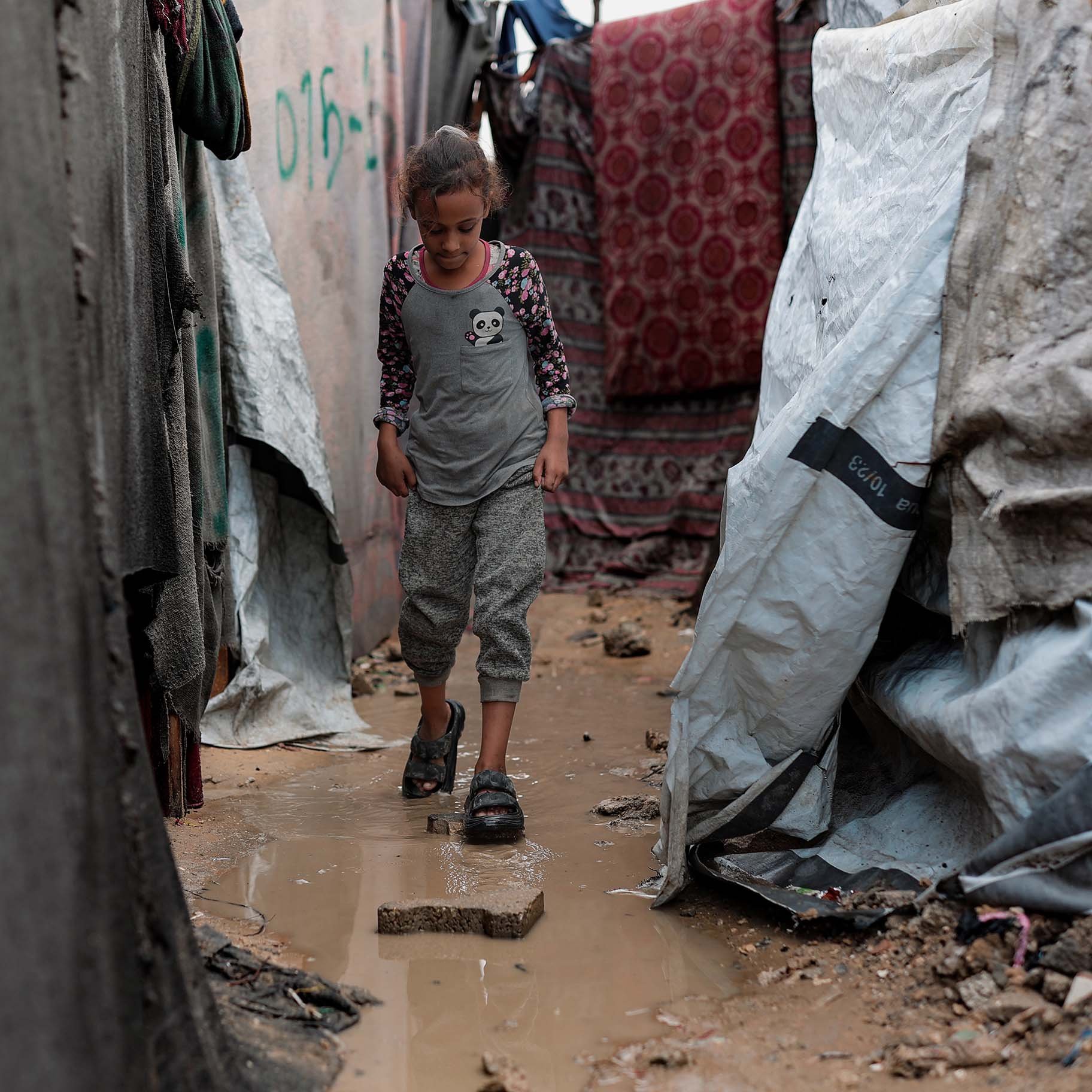
Warming temperatures mean pests and diseases are on the rise in Gaza’s camps. (Image credit: Hosny Salah)
With warming temperatures, it is the perfect conditions for the spread of pests, including rodents and insects.[3] Caritas Jerusalem tell us: “Our medical teams are treating rodent-related incidents every single day… Rats and mice spread deadly infections through bites, urine, saliva, fleas, and droppings. Doctors fear outbreaks of Hantavirus, Leptospirosis, Salmonellosis, Rat-bite fever, and even Plague…everything is being contaminated.”
The Caritas Jerusalem team also describe observing indications that “rodents have become increasingly aggressive, with altered behaviour linked to feeding under the rubble.” Gaza’s children are now fearful not just of what might attack them from the sky, but from the ground too.
Pest control has not been available due to the restrictions on what goods are allowed to enter Gaza, but on 6 May 20 tonnes of pesticides and pest control were transferred.[4] Yet without clean water, adequate shelter and sanitation facilities, the situation will not be fully resolved.
Anaemia and malnutrition widespread because of restricted diet
Prohibitive costs and limited supplies mean many people in Gaza are still unable to get the nutrients they need. During the regional conflict with Iran, a single egg cost as much as £2.25. Gaza has farmland and a coastline, with skilled farmers and fishermen - but access to both is heavily restricted. People are unable to fish, raise animals, or grow even simple crops to supplement their diet. As a result, families are being cut off from the most basic means of feeding themselves.
Women and children are feeling this acutely. The NECC told us of the prevalence of anaemia and malnutrition, particularly among the pregnant and postpartum women they treat. These are not isolated incidents; the UN is estimating that 37,000 pregnant and breastfeeding women and 126,000 children under 5 will suffer from acute malnutrition in 2026.[5]
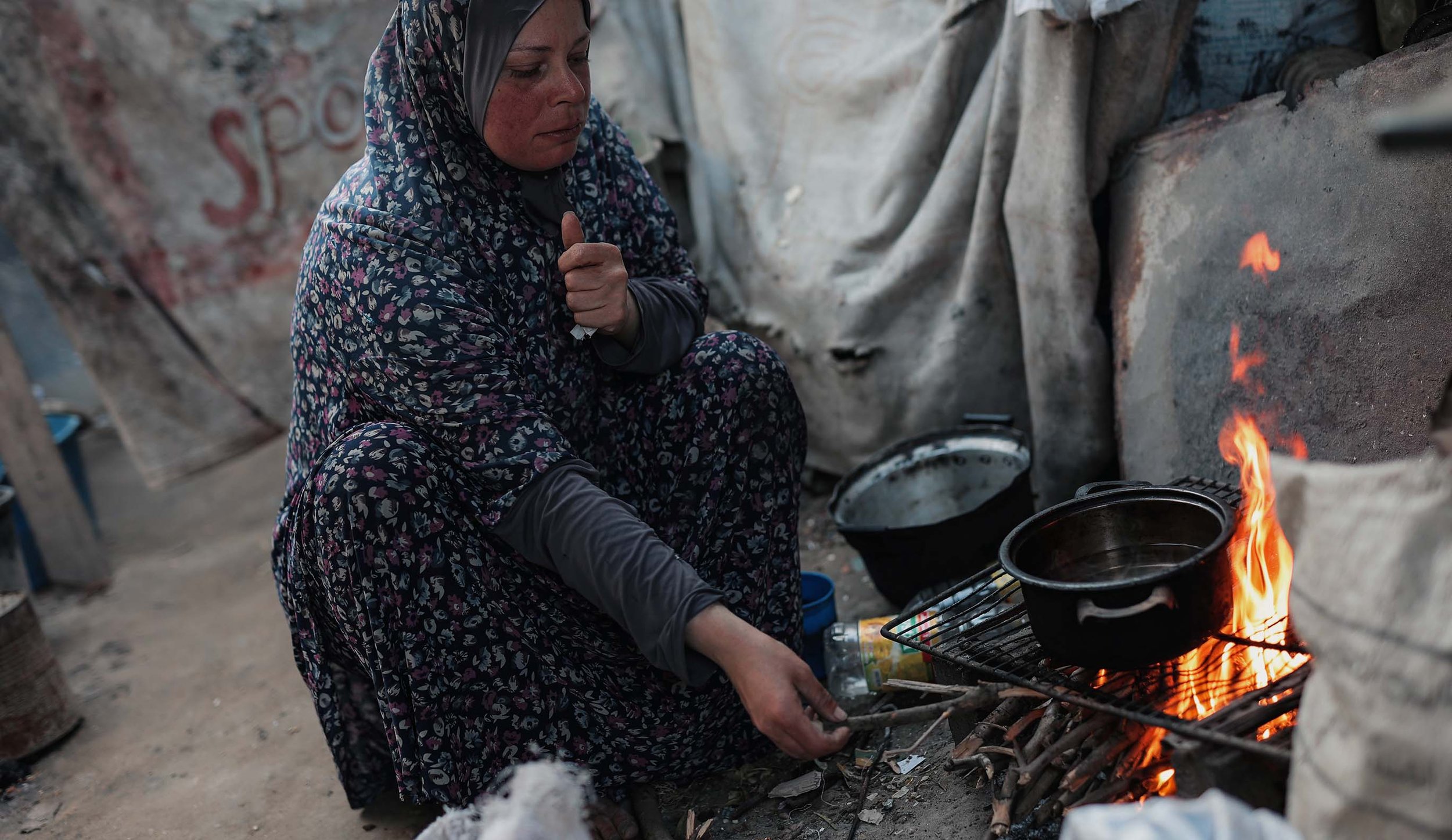
Prohibitive costs and limited supplies of food mean many in Gaza are still not able to get the nutrients they need. (Image credit: Hosny Salah)
Lack of medical supplies inhibiting healthcare response
Our partners are continuing to respond to these unfolding needs, but ongoing restrictions and delays on aid entering Gaza means they do not have the full resources that they need. Basic equipment and supplies such as medication, foetal doppler machines and lab testing equipment is limited or unavailable.
Our partner NECC is now having to work from rented or make-shift clinics, and much of their equipment has been damaged, destroyed or stolen in the conflict. Their running costs are also high; electricity is incredibly expensive, costing each clinic around $150 per day.
Restrictions on replacement parts being able to enter Gaza means vital equipment, such as the generators at Al Ahli Hospital, are struggling to keep up with the excessive demands. The UN is now warning that without the entry of new generators, there could be a rapid collapse of essential services.[6]
The limitations mean healthcare workers are not always able to provide the full services that people need. Our partners talk of the huge emotional toll this is taking on doctors, nurses and other members of the team.
And the people providing care are not separate from the conditions in Gaza. They do not return to safe homes, but often to their own tents, ever aware of the loved ones and friends who are now missing from their tables and communities. But through all of this, our partners show resilient courage and commitment, both to their communities, and to continuing their work despite the challenges they face. The General Director of NECC told us “Despite all that has happened in Gaza, we are still here and we will rebuild.” And Embrace commits to standing with them every step of the way.
You can stand with them too:
By praying for the people of Gaza and for the diplomats who are negotiating a future peace agreement.
By giving to Embrace’s Gaza Appeal, enabling our partners to keep offering the best services and care that they can.
By sharing what you have read with your churches, friends, MPs and on your social media and help us to keep this devastating humanitarian situation in the spotlight.
GAZA CRISIS APPEAL
[1] Médecins Sans Frontières (MSF), ‘Water as a Weapon: Israel’s destruction and deprivation of water and sanitation in Gaza.’ [Mar 2026] (Accessed: 6 May 2026), p.3.
[2] Ibid., p.1.
[3] Ibid., p.11.
[4]Israel says it coordinated delivery of rat pesticides to Gaza to counter infestation | The Times of Israel
[5]Reported impact snapshot | Gaza Strip (29 April 2026) | United Nations Office for the Coordination of Humanitarian Affairs - Occupied Palestinian Territory
[6]Humanitarian Situation Report | 1 May 2026 | United Nations Office for the Coordination of Humanitarian Affairs - Occupied Palestinian Territory