Coping with the emotional toll of fear and displacement in Lebanon
MAYA’S STORY
Like many young Lebanese, 20-year-old Maya was working hard at her studies and planning for her future career, studying Interior Design at university – but then conflict devastated her life.
Maya and her family had to flee their home and spent 10 days with nowhere to sleep but their car before they eventually found a space in school which had been turned into a public shelter. Despite the ceasefire, damage to their home means they are still living in the school with other displaced families.
Maya describes initially feeling deeply disorientated and overwhelmed. But for her the most difficult aspect has been seeing the contrast of some people able to continue their daily routines, while her life was turned upside down. She also suffers with continuing fear for the safety of other members of her family who had stayed behind when they fled.
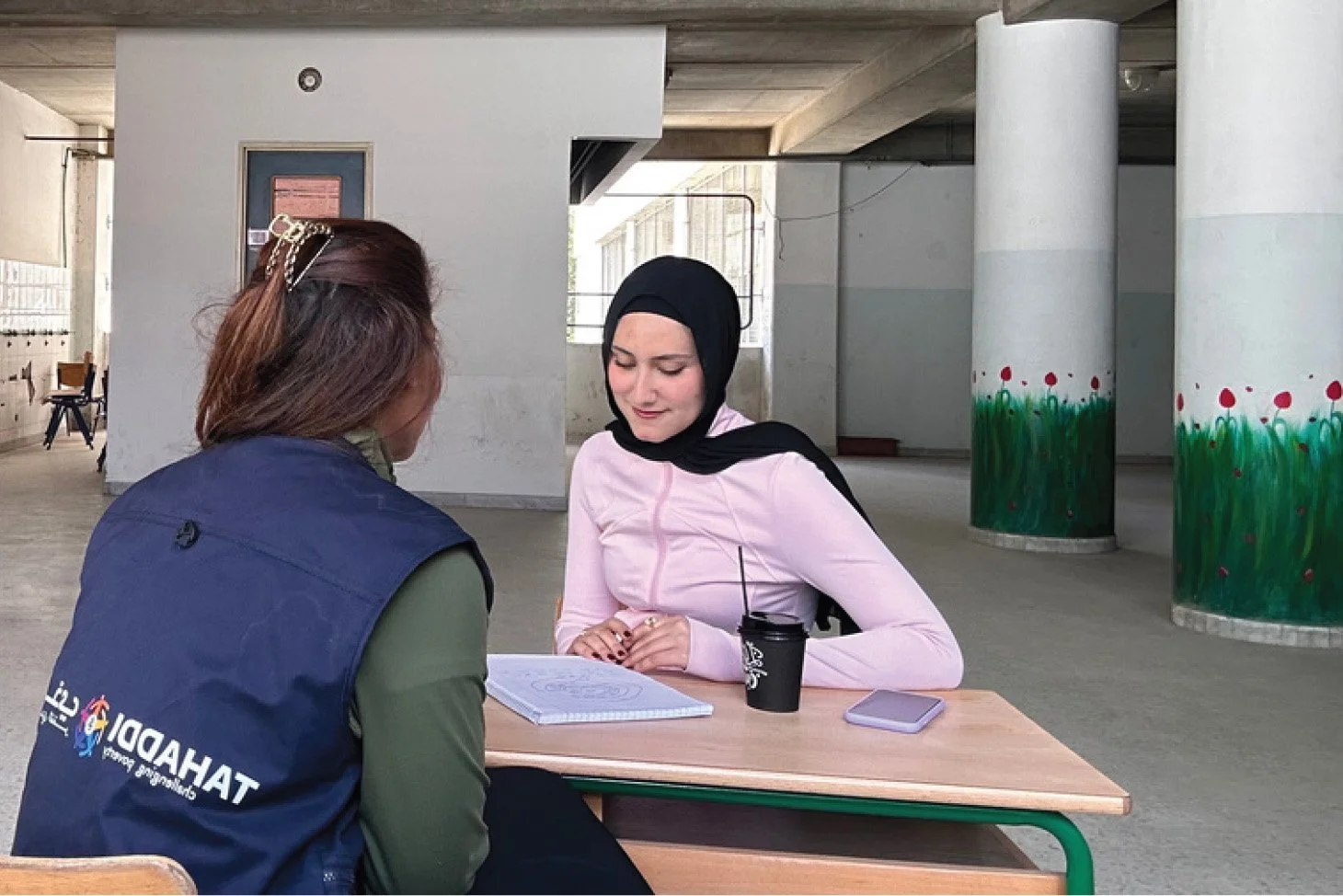
The psychosocial team of Embrace partner Tahaddi (which provides a range of healthcare and educational support) have been visiting the public shelters to run individual intervention sessions and group activities to help young people like Maya cope with the trauma of the war. Even after just two sessions, Maya was noticing the impact:
“I really thank you for these two amazing sessions, and I hope in the coming days I can have more… It helped a lot, as if I was waiting for someone to say those words. I would ask you questions and you would answer. I was so happy, and I felt it helped my personality become stronger.”
Many young people are struggling with a complex mix of emotions including frustration, gratitude, fear, anger, and resilience. Tahaddi’s step-by-step self-reflection process helps them express their feelings and identify needs and work through simple activities to help process their emotions.